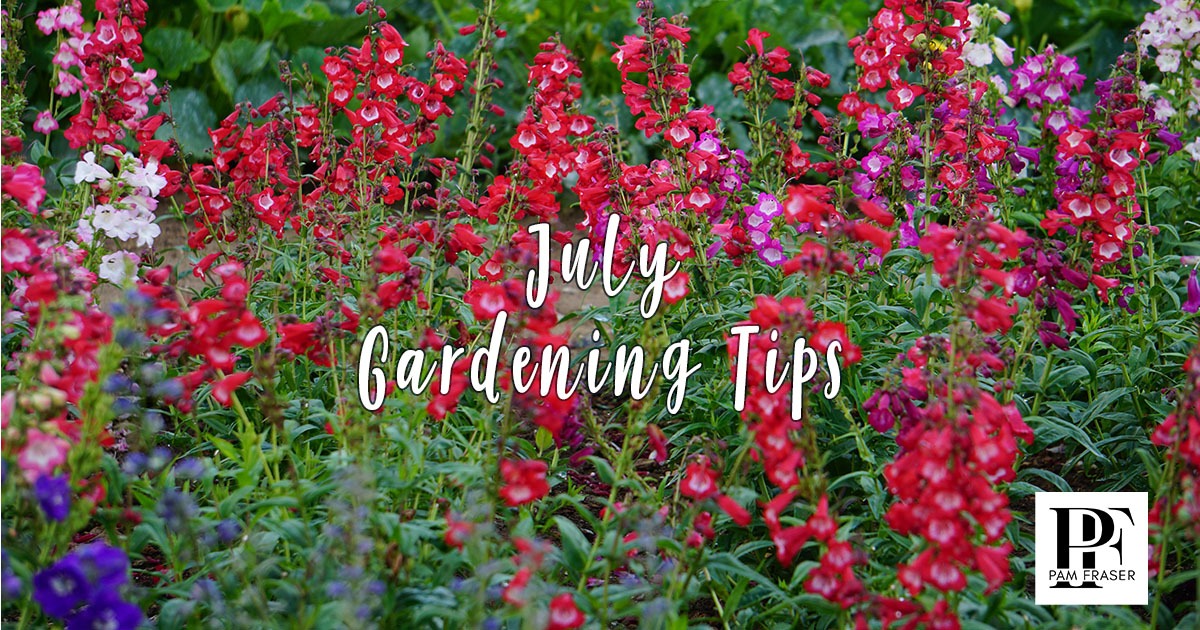
Summer is in full swing in San Diego gardens, and this month’s tips include new planting opportunities, ant control strategies, and troubleshooting common tomato problems.
What to Plant Now
Although summertime is not what we usually think of as “prime planting time” in San Diego County, there are still plenty of planting opportunities this month.
Add your last warm-season vegetables now for fall harvest. Plant tomatoes, peppers, eggplant, corn, beans, melons and summer squash.
Fill in empty spots with summer annuals like portulaca, verbena, vinca and zinnias. Plant begonias, coleus and impatiens in shady areas.
Sow seeds in flats now for cool-season annuals such as snapdragons, pansies, violas, sweet alyssum, calendulas and nemesia, along with biennials like foxgloves and Sweet William. You can also start perennials such as penstemon, Shasta daisy, yarrow, coreopsis and gaillardia. They’ll be ready to transplant into your garden in late September or October when daytime temperatures begin to cool, preparing your garden for months of cool-season color.
Control Ant Populations
To control ant populations in your San Diego garden, place insecticide baits near ant nests and trails. Choose enclosed bait stations and products containing lower-toxicity ingredients such as borate. You can purchase prepackaged bait stations or make your own using borate and sugar. Borate bait traps have worked well at my house. We start putting them out in late winter and early spring to keep ants away from the house and protect our plants. If you missed treating ants earlier in the year, bait stations can still help reduce active colonies during summer.
Insecticide sprays are not effective because they only kill foraging ants. They also kill beneficial insects, and may contaminate surface waters, harming aquatic organisms. Insecticide use is one of the reasons insect populations are declining rapidly. Studies show that in the past 50 years, insect populations have plummeted by up to 75%.
Sticky barriers help keep ants off trees and are safer for the environment. Wrap a band of heavy paper or duct tape around the tree’s trunk. Coat it with something sticky, like Tanglefoot. Make sure tree branches aren’t touching the ground or other objects that would allow ants to bypass your sticky trap.
Visit the University of California Pest Management Program for more details on less-toxic ways to keep ants out of your home and manage them in your garden.

Troubleshoot Tomatoes
Tomatoes having problems? Here are some answers to common tomato-growing issues:
- Yellow leaves – may be caused by ozone and other pollutants. Try other varieties to see if they work in your garden.
- Wilting and dying plants – verticillium or fusarium wilt may be causing this. These are fungal diseases that can persist in your soil. Remove and discard the dead plants and don’t replant tomatoes in the same spots. Look for tomato varieties with VF resistance.
- Defoliation – tomato hornworms are large, striped caterpillars with a horn-like tail. Pick off worms by hand or use Bacillus thuringiensis (Bt). It is fatal to the worm, but won’t harm other beneficial insects.
- Cracked fruit – is caused by inconsistent irrigation. Water deeply in a 2-foot radius around each plant, increasing irrigation as temperatures rise.
- Blossom drop – occurs naturally if daytime temperatures exceed 90 degrees or nighttime temps drop below 55. Once temperatures regulate, plants will start to blossom again.
- Blossom end rot – is a brown, sunken area at the base of the tomato. This is caused by a calcium deficiency, but fertilizing is usually not the answer. Your soil likely has enough calcium, but when plants do not receive steady moisture, calcium does not move properly into the fruit. Keep soil evenly moist. Mulch vegetable beds with straw to help retain moisture.
San Diego Gardens Source
A lot of information for San Diego Gardens comes from the Master Gardener Association of San Diego County. They are a great resource for all of your gardening needs including planting, pests, vegetables and water use. They even have a free hotline where you can get answers to your home gardening and pest control problems.