Updated July 2026
Homeownership can be a powerful way to build long-term wealth, but it is not guaranteed and it does not happen quickly. While home values can rise and fall over shorter periods, the combination of appreciation, paying down a mortgage, and holding property over time has helped many homeowners build equity.
Homeownership and Equity in San Diego County
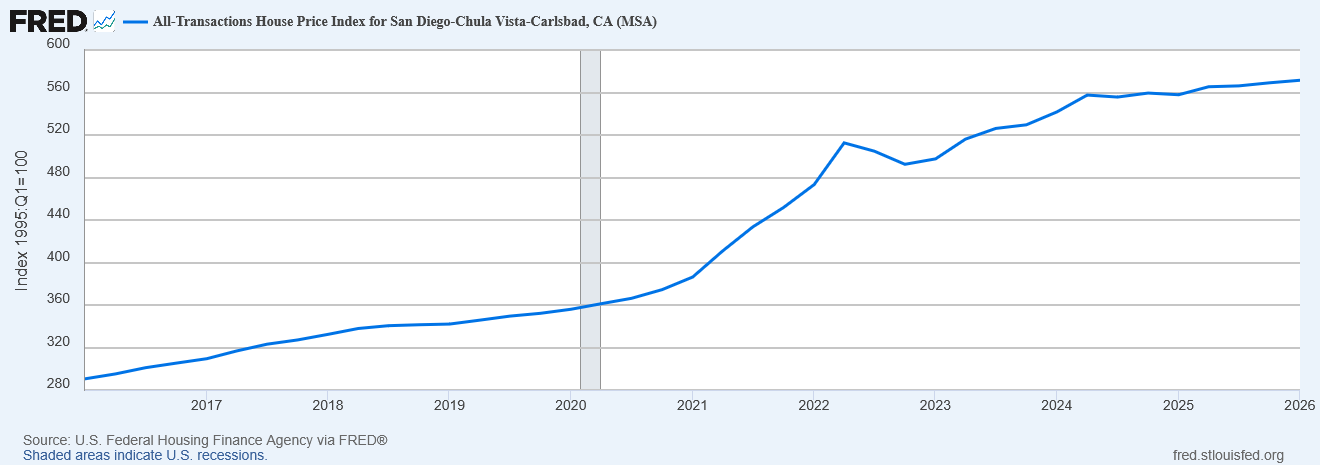
Many long-term homeowners in San Diego County have built substantial equity, although the amount varies based on when they purchased, how much they borrowed, and how their home’s value has changed. Local prices do not rise steadily every year. Periods of strong appreciation can be followed by years when values remain relatively flat or decline, which is why homeownership is generally more effective as a long-term wealth-building strategy.
For current North County and San Diego pricing trends, see my latest housing market update.
Homeownership Is a Major Contributor to Household Wealth
Homeownership is strongly associated with higher household wealth. A 2025 Realtor.com analysis of the Federal Reserve’s latest Survey of Consumer Finances found that the median net worth of homeowners was $392,600 in 2022, compared with $10,400 for renters, a difference of nearly 39 times. That does not mean homeownership alone created the entire wealth gap, but it illustrates how significantly home equity can contribute to a household’s net worth over time.
How Does Homeownership Build Wealth?
Appreciation
Appreciation is the increase in a home’s value over time. It is not guaranteed, and gains are rarely consistent from year to year. Even so, the Federal Housing Finance Agency’s national House Price Index has increased at a compound annual rate of about 4% since 1991. When a home appreciates, that increase adds to the owner’s equity, although the results for an individual property will depend on its location, condition, price range, and the market when it is bought and sold.
Leverage
Leverage means using borrowed money to purchase an asset. If you buy a $950,000 home with 10 percent down, you invest $95,000 and finance the remaining $855,000. If the home later appreciates by 20 percent, its value increases by $190,000 because the gain is based on the full value of the property, not just your down payment. That $190,000 increase is twice your original down payment, which shows how leverage can magnify gains.
Leverage can also magnify losses. If the home’s value declines, your equity can shrink quickly, particularly when you purchased with a small down payment. Buying a home you can afford to hold for several years gives you more time to ride out a downturn, although there is no guarantee that values will recover within a particular period. If you need to move, renting the property may give you another way to hold it through a slower market.
Principal Paydown
With a typical mortgage, part of each monthly payment goes toward reducing the loan balance. As that balance falls, your equity increases, even if the home’s value does not change. Over time, that principal paydown acts as a form of forced savings.
How Much Equity Have You Built?
If you are curious about how much equity you may have in your home, contact me for a complimentary market evaluation. If you are considering buying, you can also request my complimentary Home Buyer’s Guide.
This article is for general informational purposes only and is not intended as financial advice. Consult a qualified financial professional regarding your individual circumstances.