March brings noticeable change to San Diego gardens. Winter annuals begin to fade, spring growth accelerates, and garden tours start filling the calendar. Here are a few things to focus on this month.
Plant
Winter annuals are starting to fade as temperatures warm. This is a good time to replace them with warm-season options such as coleus, cosmos, verbena, marigolds, petunias, vinca, celosia, nicotiana and phlox.
If you prefer to grow from seed, consider aster, cleome, lobelia, lunaria, nasturtium, sunflowers, tithonia and verbena. Many of these can be started in flats or sown directly in the garden. Inland gardeners should wait until mid-month or later to start seeds.
Fall is the best time to add perennials, but March is the second best. Heat-tolerant choices that perform well in our area include lavenders, kangaroo paws, sages, pincushion flowers (Scabiosa), asters, penstemons, heliotropes, artemisia and African daisies.
Azaleas and camellias are in bloom and dormant when flowering. This is the best time to plant them. Our soils are typically alkaline and low in organic matter, so amend with compost and use a soil acidifier to create the soil conditions they prefer.
Spring Garden Tours and Flower Shows
March is when garden tours and flower shows begin to pop up around San Diego County. If you enjoy seeing what thrives in our climate or picking up practical ideas for your own landscape, here are some you might want to visit this spring.
March Events
- Cherry Blossom Festival — Japanese Friendship Garden
March 12–15, 2026
Seasonal bloom viewing and cultural programming in Balboa Park. - San Diego Horticultural Society – The Art of Coastal Gardening
March 29, 2026
A self-guided Spring Garden Tour presented with the Association of Professional Landscape Designers San Diego District featuring coastal residential gardens.
April Events
- Coronado Flower Show
April 18–19, 2026
One of the largest tented flower shows in the country. -
California Native Plant Garden Tour — Buena Vista Audubon Society
Sunday, April 26, 2026, 2 pm
Over 19 native plant gardens in the historic seaside neighborhood of downtown Oceanside. Free guided 1.5-mile walking tour. Donation requested for map. Meet at St. Mary’s School, 515 Wisconsin Avenue, Oceanside.
May Events
- Vista Garden Club – 90th Annual Flower Show
May 2–3, 2026
Jim Porter Recreation Center, Brengle Terrace Park, Vista. Saturday plant and garden art boutique sale opens at noon. Flower show opens at 2 pm after judging and closes at 5 pm. Sunday hours are 10 am to 5 pm. Free community event. - Poway Valley Garden Club – 47th Horticulture Specialty Flower Show
May 9, 2026, 9 am–3 pm
Old Poway Park - Fallbrook Garden Club – Botanical Treasures Plant Sale
May 16, 2026, 9 am–2 pm
Fallbrook Historical Society, 1730 S. Hill Ave., Fallbrook. California natives, flowers, houseplants, planted containers and more.
Walking through a garden or flower show often gives you ideas that translate well into our own North County and San Diego gardens.
Manage Snails and Slugs
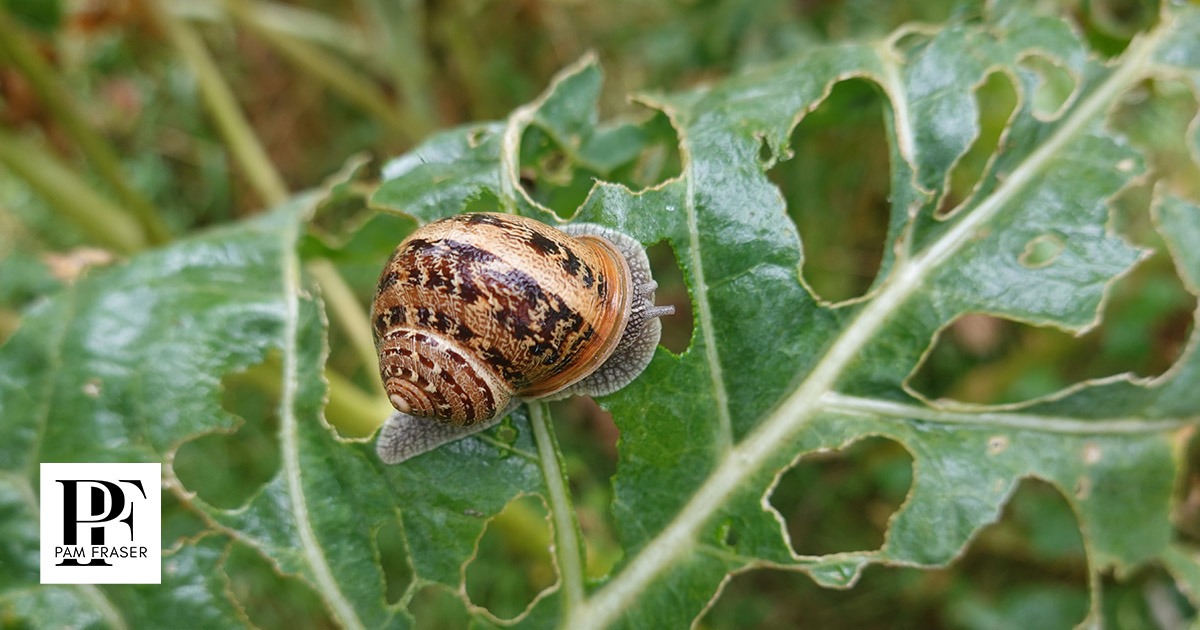
Snails and slugs are active during our cool, cloudy spring weather and can quickly damage tender new growth. If you are seeing irregular holes in leaves, especially on seedlings or low-growing plants, they may be the cause.
You can manage them without traditional pesticides. Remove daytime hiding spots such as boards, overturned pots, dense groundcover or piles of debris. Handpick snails in the early morning or evening, bag them, and dispose of them in the trash.
Copper bands placed around containers or tree trunks can help, as snails are reluctant to cross copper surfaces.
Iron phosphate baits such as Sluggo or Escar-Go are another option and are considered safer for use around pets, children and wildlife when used as directed.
Beer traps or melon rind traps can also attract and capture snails.
For more detailed information on identification and control methods, see the University of California Integrated Pest Management guidelines: http://www.ipm.ucdavis.edu/PMG/PESTNOTES/pn7427.html.
San Diego Gardens Tips Source
A lot of information for San Diego Gardens comes from the Master Gardener Association of San Diego County. They are a great resource for all of your gardening needs including planting, pests, vegetables, and water use. They even have a free hotline where you can get your home gardening and pest control problems answered.